

Cheltenham Festival 2024: Value Picks and Strategy
The Cheltenham Festival presents a compressed sequence of high-quality handicaps and Grade 1 contests where careful selection can reveal value at bigger prices. This guide expands on our four daily suggestions and offers a practical framework for spotting worth while remaining responsible and informed.
How to find value bets across the four days
Value betting at Cheltenham is more about process than hope: combine form study, course and trip suitability, and market movement to identify mispriced chances. Keep stakes sensible, use comparisons to get the best odds, and remember that betting should be for entertainment only for those aged 18 and over.
Assessing form: what to look for in the racebook
A careful read of each horse’s recent form helps separate a genuine contender from a one-off run, so check finishing positions, margins, weight carried and class switches. Look for horses that have shown consistency at similar trips and against comparable opposition rather than relying on headline wins alone.
Simple form signals that justify a value bet
Signals that support a value punt include a progressive run sequence, a comfortable win in similar ground, or a narrow defeat when carrying top weight or racing off-season. Those markers can justify backing at odds of 10/1 or bigger provided other factors align.
Interpreting recent runs, ground and trip suitability
Ground and trip matter hugely at Cheltenham; some horses have a clear preference for soft or heavy going and others need a sharper 2m test or a longer staying trip. Compare a horse’s best performances to the forecast conditions and the race distance to gauge whether the Festival test suits its profile.
When to prefer each-way over win-only bets
Each-way is the sensible choice when a horse has shown consistent placed form, course experience or a late-closing style that the race complexion might favour. If the market pays at least three places and the price is generous, an each-way approach preserves value while acknowledging uncertainty.
Bookmaker selection and where to compare odds
Different bookmakers price the same horse differently, particularly in the longer-priced markets, so use comparison tools to lock in the best available price before placing a wager. Compare markets for enhanced e/w terms, best odds guaranteed on turf if available, and check for non-running policies that protect your stake.
Using bookmaker offers responsibly and comparison tools
Bookmaker offers can improve value but should be used judiciously; read terms and conditions and avoid offer-chasing that inflates liability or distorts sensible staking. Our comparison pages list current free bets and offers so you can compare transparently and keep gambling within your limits.
Bet types: each-way, forecast and sensible staking
At Cheltenham the most common value routes are each-way on longer-priced chase and hurdle runners, small forecasts in small fields and carefully sized singles on proven graded horses. Mix bet types modestly, prioritise stake management and avoid overplaying multiple market exposures in the same race.
Watching the market and knowing when to take odds
Market movement is often informative: a shortening price may reflect smart money or late confidence, while drift can indicate concern or weight of money elsewhere. Decide your maximum acceptable price in advance and take it if it reflects your edge; if the odds shorten significantly and you still believe in the pick, reassess stakes rather than chase a smaller edge.
Managing your bankroll and avoiding common traps
Set a dedicated Festival bankroll and divide stakes into small units to avoid emotional decisions on high-profile days, and never stake more than you can afford to lose. Avoid “martingale” approaches, chasing losses, or increasing stakes because of past near-misses; consistent, modest staking preserves long-term fun and reduces harm.
Betting at Cheltenham is entertainment and should remain so; if you think you might have a problem, seek help and use tools such as self-exclusion, deposit limits and time-outs offered by bookmakers. Always confirm you are 18 or over before opening accounts and engaging with any gambling product.
Applying the picks to practical betting plans
Use the four runners highlighted earlier to build a measured plan — for example a small each-way on the bigger-priced contender, a conservative single on the more consistent performer and a zap stake for an outrider with a speculative chance. Allocate a small proportion of your total Festival bankroll to each selection and treat any return as discretionary profit, not income.
Risk versus reward: how to size Cheltenham punts
Sizing is driven by confidence and value; a longer-priced pick with clear each-way claims might merit one unit e/w, while a stronger but shorter-priced chance may get a fraction of a unit. The aim is to preserve balance across the week so one race does not dictate your Festival exposure.
Reading trainer and jockey trends at the Festival
Cheltenham is a specialist meeting where trainer and jockey form cycles matter; look for horses from stables that target the Festival and jockey-trainer combinations that have shown a pattern of success. Consider stable notes — such as a trainer’s preference for running lightly raced horses in novices or targeting specific staying contests — as part of your assessment.
What to watch live and how in-race dynamics affect outcomes
In-race factors like pace, early positioning and jumping efficiency often decide Cheltenham contests, especially over the larger obstacles and on the testing Old Course layout. If you can watch replays or live coverage, note how a horse settles and jumps early; a horse that finds the pace too hot or makes a bad early error is harder to forgive at the Festival level.
Avoiding psychological biases when following big festivals
Favourite bias, recency bias and overconfidence after a single win are common pitfalls at big meetings; measure each selection against objective criteria and avoid increasing stakes simply because you feel lucky. Keep a simple checklist — form, trip, ground, jockey/trainer, market — and use it consistently across the card.
Cheltenham markets can be exciting and fast-moving; stay disciplined, limit the number of different bets you place and use bookmaker comparison tools to secure the best price. If you choose to use promotional offers, do so with clear understanding of the terms and only within your set bankroll.
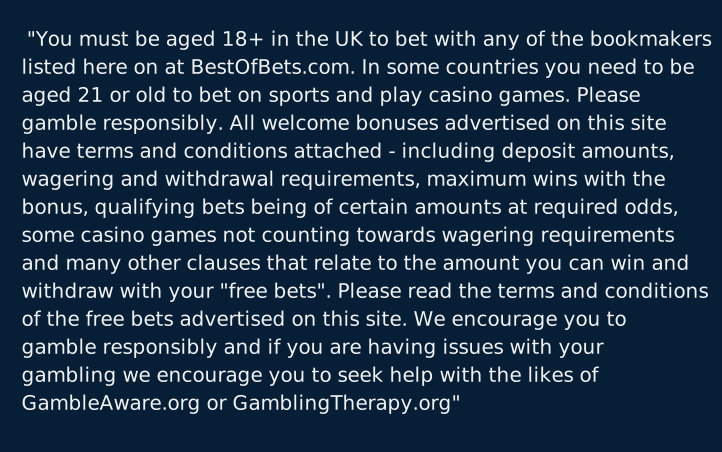
18+ only. If gambling causes you concern, seek support from organisations such as GamCare or use responsible gambling tools provided by licensed bookmakers.
You can explore current bookmaker free bet offers and compare terms responsibly at our free bets page: BestOfBets free bets comparison. For those interested in casino promotions, our casino bonus page lists current offers and their terms: BestOfBets casino bonuses.
Is handicapping Cheltenham different to other meetings?
Yes, Cheltenham’s concentrated Grade 1 and big handicap structure rewards specialists who perform well at the course and distance, so weight and track experience carry extra influence. Horses that have handled Cheltenham’s unique undulations or the New Course often have an advantage over similarly rated rivals without that experience.
How should novices and staying hurdlers be assessed?
For novices look for a progressive pattern and adaptability to the likely test; for stayers focus on stamina-rich profiles, late-closing ability and a history of performing over two-and-a-half miles or further. In both cases, assess whether a step up in class or a return to softer ground alters a horse’s realistic chance.
When is it sensible to use forecasts or multiples at the Festival?
Forecasts can be sensible in small fields where two runners stand out, or when the market suggests a clear top pair with little volatility expected. Multiples inflate variance and should be used sparingly; they can be entertaining but often reduce value compared with well-chosen single or each-way stakes.
What value information can be gleaned from market moves?
Late shortening often indicates confident money from professional punters or informed syndicates, but not every move is meaningful — sometimes a market simply reacts to public attention. Use moves as a piece of the puzzle, not the sole justification for a bet, and cross-reference with form and trainer news.
How to balance emotion and objective analysis during the week
Limit emotional bets by setting a daily or weekly unit cap and keeping a written record of selections and rationale to review after the Festival. Objective analysis thrives when you strip out bias, follow consistent criteria and accept that variability is part of racing.
Final practical checklist before placing a Festival bet
Confirm the going, review each horse’s recent finishing positions and weight, check for jockey or course changes, compare prices across bookmakers and set a clear stake that fits your bankroll. If in doubt, step back — patience is a valuable trait across a long Festival week.
Am I eligible to use Cheltenham betting information and services?
Only users aged 18 or over should use betting services and information; confirm your age and jurisdiction before engaging with any bookmaker. Always gamble responsibly and within limits you can afford to lose.
How can I check if a bookmaker offers best odds or e/w terms?
Use comparison tools to display available markets and read each bookmaker’s terms for e/w places and best odds guarantees on horse racing. Ensure you understand the payout structure before staking any money.
What is the safest way to use bookmaker promotional offers?
Read the full terms and conditions, avoid overtrading to meet wagering requirements, and treat bonuses as optional extras rather than a reason to increase your stake. Use offers only within your pre-set bankroll and time limits.
Should I always take an each-way option at bigger odds?
Each-way is appropriate when a horse has credible placed form and the e/w terms give value across the expected number of places. If the field is large and the horse has course form or consistent placings, each-way can be a prudent play.
How do I manage losses during a busy Festival week?
Set clear daily limits and avoid increasing stakes to chase losses; stick to your bankroll plan and consider taking a break if you feel tilted. If gambling causes harm, seek help from GamCare or use bookmaker support tools.
Can I rely on celebrity tips or social media pointers for Cheltenham bets?
Social media and celebrity pointers can highlight interest but should not replace independent research; verify claims against form, trainer news and market pricing. Use social signals as one input among many and avoid impulsive reactions to hype.
How many races should I bet on each Festival day?
There is no fixed number; bet on races where you have clear value and avoid overextending across too many contests. Prioritise quality analysis over quantity and keep total stakes within your Festival bankroll.
Where can I find safe gambling resources and support in the UK?
UK customers can access help from organisations such as GamCare, GambleAware and the NHS for problem gambling support and guidance. If you feel your gambling is becoming a problem, use self-exclusion or contact support services immediately.